
Building a CRM Platform from the Ground Up
Client Name

Project Overview
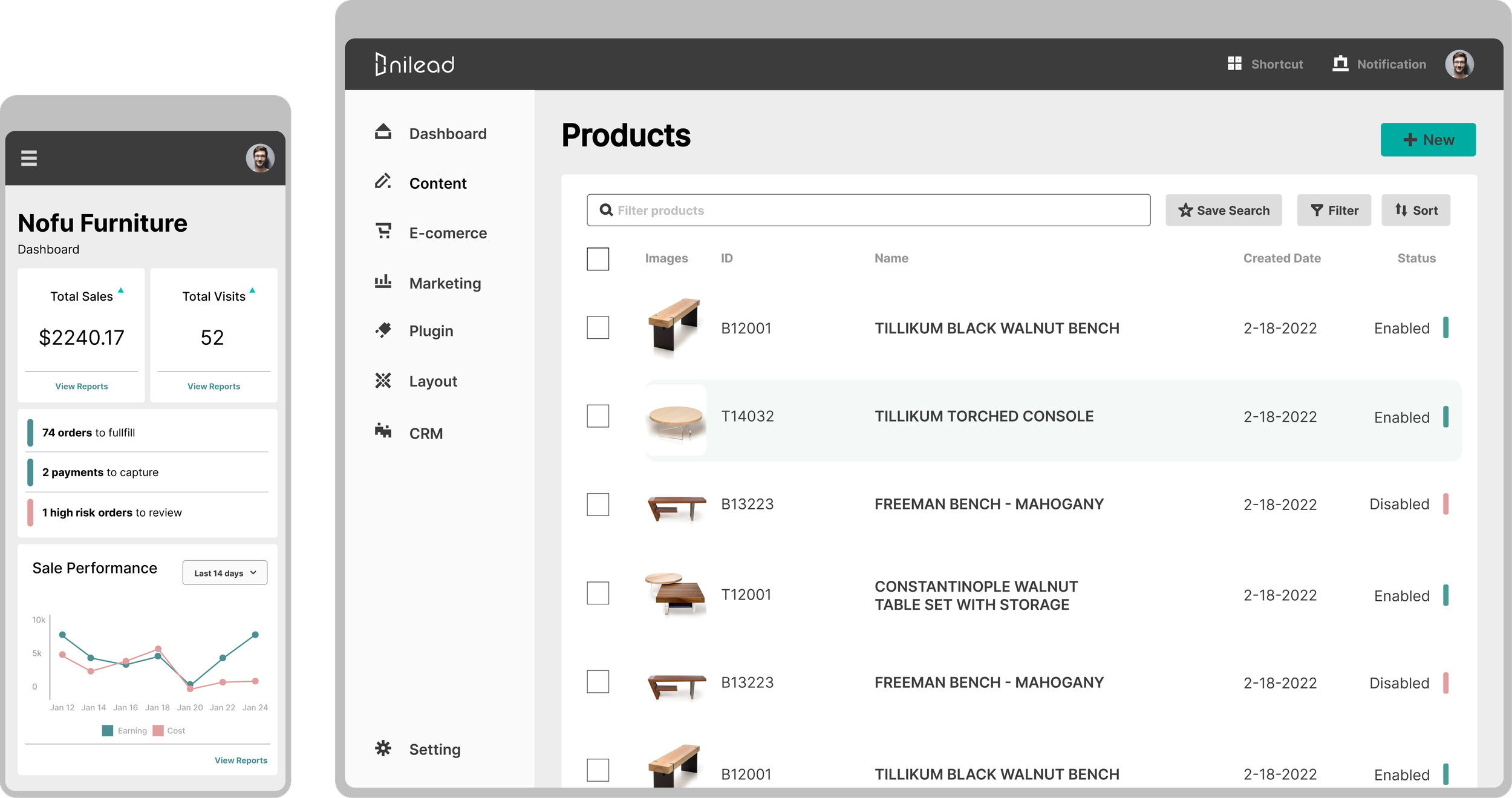
Founded in 2014, Nilead was an early-stage, 10-person startup developing a no-code website builder with an integrated CRM platform. As the sole UI Designer, I worked closely with the CEO, Product Manager, and developers to design the CRM interface and establish a consistent visual language across the product.
Rather than defining product strategy, my role was to translate business requirements into production-ready user interfaces that balanced usability, visual consistency, and implementation feasibility. This case study focuses on the CRM platform, which I continuously designed and refined throughout my two years at Nilead.
My Role
Solo UI & Visual Designer
Industry
B2B SaaS / Web Technology
Team
Product Manager, Engineering Team (Frontend & Backend)
Duration
2 years (2014-2016, ongoing project development)
Project Goal
The goal of this project was to design a scalable CRM interface that could support a growing set of business features while remaining clear, intuitive, and visually consistent.
To achieve this, I focused on creating reusable UI patterns, improving information hierarchy, and establishing design standards that would allow the product to evolve without sacrificing usability or consistency.
My Responsibilities
Designed user interfaces for multiple CRM modules, including dashboards, forms, tables, and navigation.
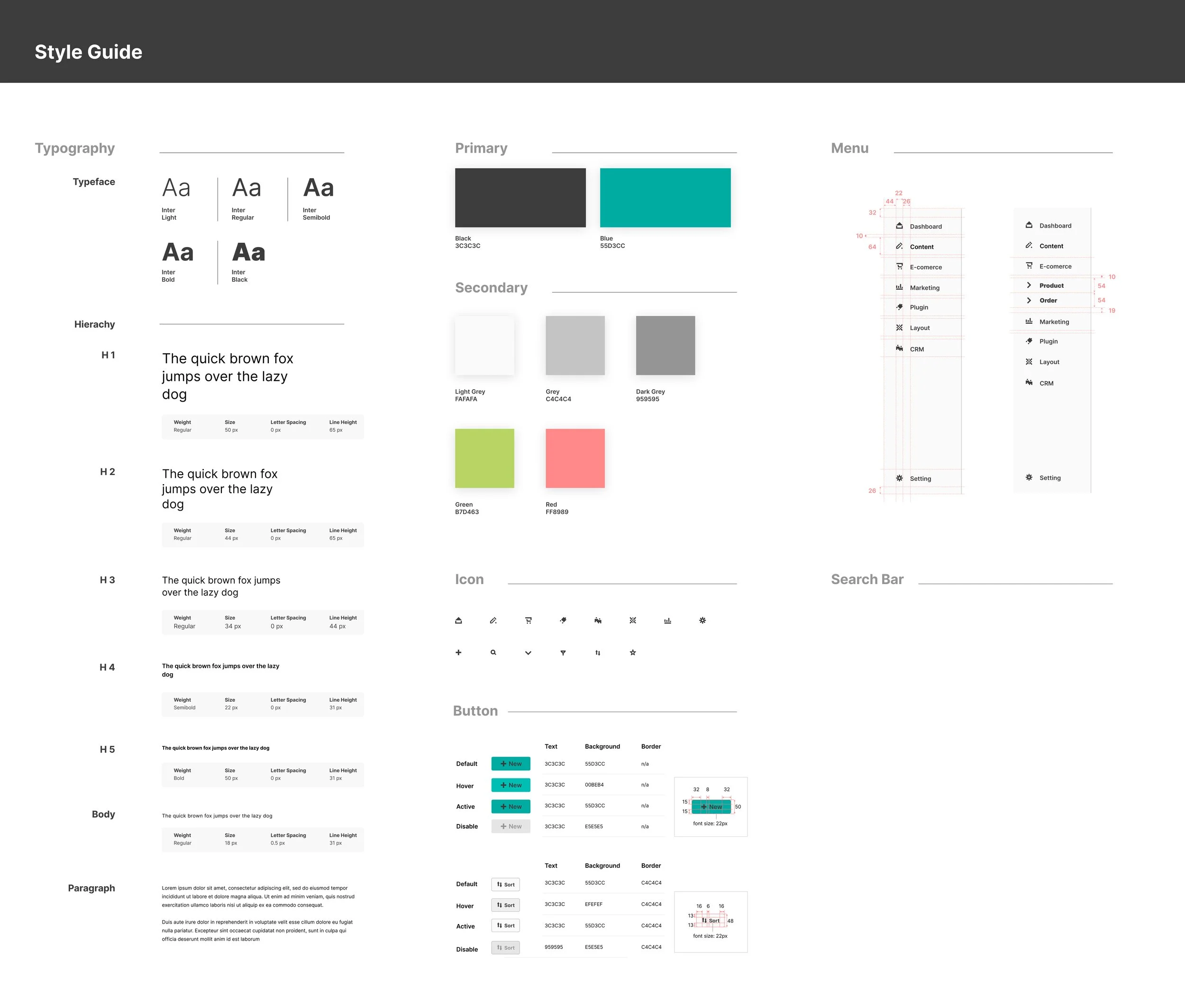
Established reusable UI guidelines to maintain visual consistency across the product.
Collaborated closely with the CEO, Product Manager, and developers throughout the product lifecycle.
Created production-ready interface designs that supported an evolving product roadmap.
Maintained a cohesive visual language while new features and modules were continuously introduced.
Success Criteria
Present complex CRM information in a clear and organized way.
Maintain consistency across multiple modules and screens.
Establish reusable UI guidelines for future product growth.
Deliver production-ready designs that were practical for development.
Design Process
1. Understanding the Requirements
The project began with discussions between the CEO, Product Manager, and development team to define product requirements and business goals. To accelerate development, the team referenced an existing CRM solution as a functional benchmark. My role was to understand those requirements and transform them into a polished interface that aligned with Nilead’s visual identity rather than simply replicating the reference product.
2. Designing the Interface
Using Adobe Illustrator, I designed the user interface for each CRM module, including dashboards, forms, tables, navigation, and reusable UI components. I focused on creating clear visual hierarchy, intuitive layouts, and consistent interaction patterns so users could move between different modules without unnecessary cognitive effort. Every design decision—from spacing and typography to component usage—was made to improve clarity while maintaining a cohesive visual language throughout the product.
3. Establishing UI Guidelines & Iterating
This CRM was an evolving product that I worked on throughout my two years at Nilead. As new features and modules were continuously introduced, the interface was regularly refined to support the product’s growth.
To maintain consistency across an expanding system, I created a UI guideline that documented reusable visual styles and common interface patterns. Throughout the project, I collaborated closely with the CEO, Product Manager, and developers, refining interfaces as requirements evolved while ensuring new features integrated seamlessly into the existing product.
Design Challenge
Over the course of two years, the CRM evolved from an early-stage product into a more comprehensive platform with additional modules and features. Throughout this process, I continuously refined the user interface while maintaining a consistent visual language across the product.
The UI guideline I established provided a reusable foundation for common interface patterns, making it easier to design new screens and helping ensure consistency as the product expanded. Close collaboration with the CEO, Product Manager, and developers also allowed the design to evolve alongside changing business requirements while remaining practical to implement.
Most importantly, this project demonstrated how thoughtful interface design and consistent design standards can support the long-term growth of a software product—not only by improving visual quality, but also by making the experience more cohesive and scalable over time.
Results
Nilead was an early-stage startup building a CRM platform. To accelerate development, the team used an existing CRM product as a functional benchmark while adapting the experience to Nilead’s own brand and business needs.
Over the two years I worked on the product, new modules and features were continuously introduced, requiring the interface to evolve while maintaining a consistent visual language. As the sole designer, my challenge was to transform those product requirements into polished, production-ready interfaces rather than simply replicate the reference product. I established reusable UI guidelines, maintained consistency across an expanding system, and ensured new functionality integrated seamlessly into the existing product.
Reflection
This project marked an important turning point in my career. Coming from a graphic design background, it was my first opportunity to design a complex software product and collaborate closely with product and engineering teams over an extended period.
Working on the CRM for two years fundamentally changed the way I approached design. I learned that successful product design is not only about creating visually appealing interfaces, but also about maintaining consistency, designing reusable patterns, and supporting a product as it continuously evolves.
Looking back today, I also recognize how much the industry has changed. While this project was created using Adobe Illustrator and a UI guideline, the principles I learned—clear communication, scalable interface design, and cross-functional collaboration—continue to shape how I approach product design today.